
There is a strange idea behind modern copyright: that music begins with an individual creator, emerges from nowhere, and becomes a piece of property belonging to that person—or, more frequently, to a company.
But no music comes from nothing.
This is especially obvious in electronic music.
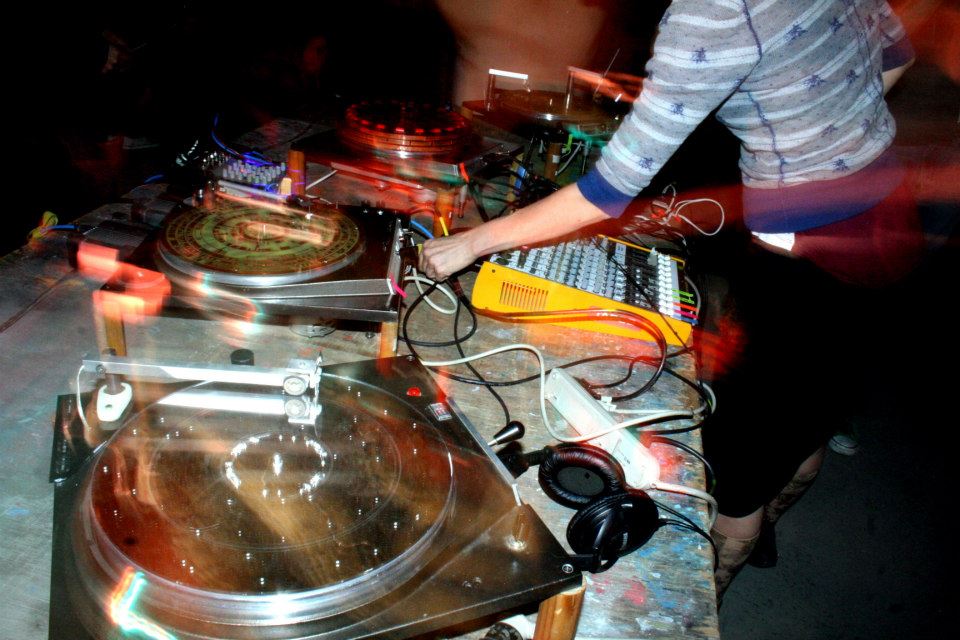
A contemporary producer works with instruments designed by engineers, software written by programmers, synthesizer architectures developed over generations, effects modeled after older machines, presets created by sound designers, and musical conventions inherited from countless previous musicians.
Even the artist who proudly says, “I created every sound from scratch,” did not really begin from zero.
They probably used oscillators they did not invent, tuning systems they inherited, a digital audio workstation built by hundreds of other people, and a musical language learned by listening to other music.
This does not make their work false or worthless. It simply means that creation is never isolated.
Music is a collective process extended across time.
We did not arrive at these ideas through theory alone. For years, we have worked with records, tapes, samplers, improvised electronics, borrowed machines, modified instruments and fragments whose original contexts had already begun to dissolve.
Sampling only makes the process visible
Sampling is sometimes treated as a suspicious exception—as though “normal” musicians create original work while samplers borrow from others.
But almost every musician borrows.
Genres are inherited structures. Rhythms travel between cultures and generations. Musicians imitate techniques, reconstruct sounds, reuse chord progressions, and absorb melodies that later reappear in altered forms.
Sampling differs because it preserves part of that ancestry inside the recording itself.
The borrowed history remains audible.
This creates a peculiar legal contradiction. A musician may reproduce the general sound, arrangement, rhythm, production style, and emotional structure of another artist while still calling the result original. But transforming a tiny fragment of an existing recording may trigger a copyright claim because the old waveform remains detectable.
You can imitate an entire aesthetic language.
You just cannot always quote one sentence from it.
Instruments also contain other people’s work
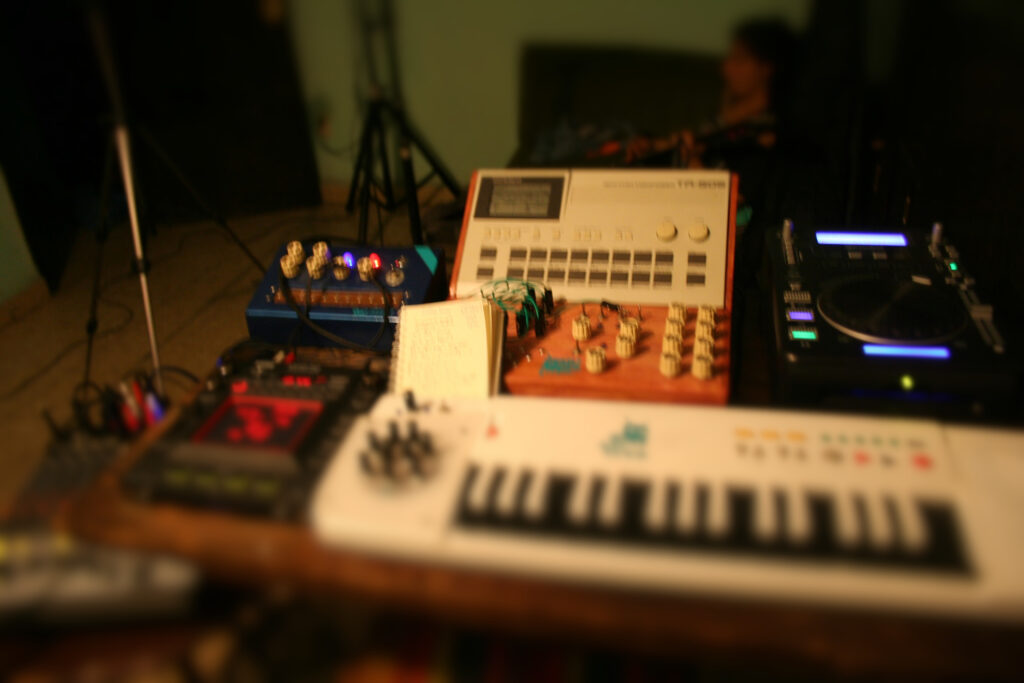
Electronic instruments are not neutral objects.
A synthesizer contains decisions made by engineers and sound designers. A sample library may contain performances by drummers, singers, orchestras, field recordists, and anonymous session musicians. A factory preset may already contain a carefully designed sonic identity.
When another musician uses these elements, we usually accept the result as their own work.
And that is reasonable. The musician has selected, combined, performed, edited, transformed, and arranged those materials into a new experience.
But the same logic should apply more generously to sampling.
The important question should not simply be:
Who owned the original sound?
More useful questions might be:
What has this sound become?
Does the new work replace the original, or does it create a different experience?
Is the material being repeated without thought, or transformed through a new context?
Music as configuration
Perhaps musicians are not creators in the mythical sense of producing something from absolute nothing.
Perhaps we are configurators.
We inherit tools, recordings, techniques, memories, mistakes, machines, and cultural fragments. We arrange them under new conditions. We place sounds beside other sounds. We alter their duration, scale, texture, rhythm, and meaning.
Then listeners activate that configuration through their own memories and experiences.
The work does not belong entirely to one moment or one person. It emerges from a chain of contributions: inventors, performers, programmers, engineers, listeners, and earlier musicians—many of whom may never know one another.
This does not eliminate authorship. It makes authorship more realistic.
A musician still contributes choices, sensitivity, time, performance, and imagination. But those contributions exist inside a much larger cultural system.
Why MDK uses Creative Commons
At MDK, we release our music under a Creative Commons licence because we want the music to continue moving.
We do not believe that listening should be treated as a controlled transaction or that every possible reuse must ask permission from a gatekeeper.
Music survives because people copy it, remember it, reinterpret it, perform it, misunderstand it, and transform it.
Our albums are themselves products of distributed work: three musicians connecting from different places, using instruments and technologies made by many other people, improvising around ideas inherited from a much larger culture.
Every recording is a remnant of that encounter.
And every listener may turn that remnant into something else.
A soundtrack. A memory. A sample. A new composition. A strange video. Another experience we could never have designed in advance.
That does not diminish the original work.
It means the work is still alive.
Copyright tries to describe culture as a collection of fenced properties.
We prefer to think of culture as an expanding field of transformations.
Nothing begins from nothing.
And nothing meaningful should have to end with its owner.